
Copper-clad plate buying guide
Start with the surfaces that will actually be exposed.
Consider copper-clad carbon steel when the approved steel grade and the protection of exposed steel suit the job. Consider copper-clad stainless steel when the back or edges need corrosion resistance from a specified stainless grade. Neither option is automatically better. Check the copper layer, service environment, fabrication requirements and complete cost before approving the material.
This guide is for buyers choosing plate for fabricated components. It provides a comparison and a practical exposure checklist you can use before requesting quotations.
1. What changes when the backing steel changes?
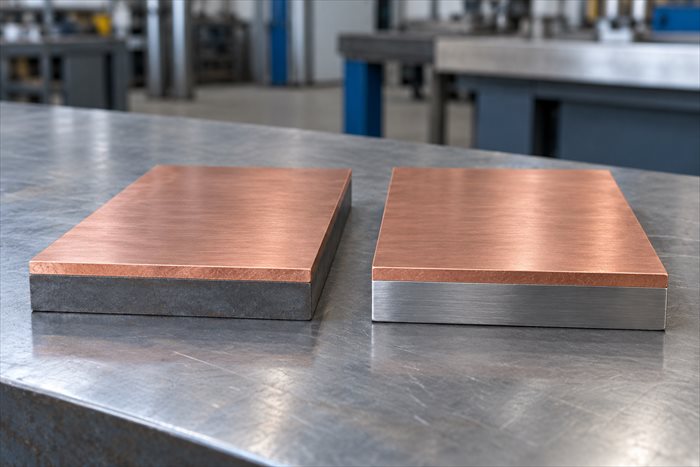
The main distinction is the steel beneath the copper. Copper-clad carbon steel has a carbon-steel base; copper-clad stainless steel has a stainless-steel base. For a fair comparison, keep the copper grade, layer thickness, dimensions and required function consistent.
Copper-clad carbon steel
A candidate when the specified carbon steel meets the structural requirements and exposed steel can be protected as the design requires. Include the back face, cut edges and any drilled features in that protection review.
Copper-clad stainless steel
A candidate when exposed backing needs the corrosion performance of a suitable stainless grade. “Stainless” is incomplete: name the grade and check it against the actual environment.
Outokumpu's corrosion guidance explains that stainless steel relies on a protective surface film and that its performance depends on both grade and environment. Chlorides, temperature and tight gaps can affect resistance to local attack. The backing material therefore needs its own assessment.
Swipe the table sideways on mobile.
| Purchase check | Carbon-steel backing | Stainless-steel backing |
|---|---|---|
| Material identity | Name the carbon-steel grade and delivery condition. | Name the stainless grade and delivery condition. |
| Exposed back and edges | Confirm the required protection and how it will be maintained. | Confirm grade suitability, surface condition and cleaning access. |
| Fabrication | Confirm the route for the actual copper/steel combination. | Confirm the route for the actual copper/stainless combination. |
| Cost comparison | Include specified protection and remaining workshop work. | Include specified finishing and remaining workshop work. |
2. Which surfaces will meet water, chemicals or cleaning fluids?
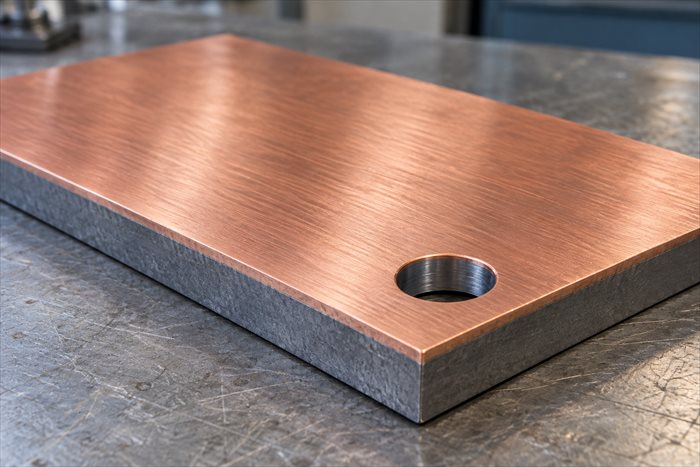
Map the copper face, steel back, edges and openings separately. A copper-covered face does not establish protection for every surface of a finished component. Cutting and drilling can leave steel exposed.
The Australian Stainless Steel Development Association's galvanic-corrosion guidance identifies electrical contact, a conductive liquid and a sufficient difference in metal potentials as the conditions for this type of corrosion. Condensation or trapped contaminated water can matter; an apparently sheltered location is not necessarily dry.
This does not mean every bonded copper/steel plate will fail in wet service. It means the completed detail needs review, including the exposed materials, wetted areas and protection scheme. Do not assume that changing to stainless removes every risk to the copper or the assembled component.
Use this exposure map with a drawing. Swipe the table sideways on mobile.
| Location | Input to record | Decision it supports |
|---|---|---|
| Copper face | Contact medium, temperature and required surface function | Whether the specified copper is suitable |
| Steel back | Dry, condensing, washed or continuously wet? | Protection scheme or suitable backing-grade review |
| Cut edges and holes | Which layers are exposed after fabrication? | Edge treatment and inspection requirements |
| Joints and supports | Trapped water, contacting metals and cleaning access | Assembly-detail review before material approval |
How the worksheet changes a buying decision
Fictional example: a component drawing shows a dry copper contact face, but its rear face is washed weekly and its drilled holes retain liquid. Record those exposures before choosing the backing. Request a protection proposal for the carbon-steel option and a grade-suitability assessment for the stainless option.
If the wash liquid's composition or temperature is unknown, the next action is to obtain that information. It is too early to approve either option solely from its material name.
3. What should your fabricator confirm before ordering?
Confirm the manufacturing route for the complete bonded plate, not just for separate copper and steel sheets. Send the finished drawing and identify cutting, holes, bending, welding and any later heating or surface treatment.
Ask how the proposed operations will preserve the required copper thickness and bond quality. Where a bend or joining operation is critical, agree the applicable procedure, any trial requirement and the acceptance checks before production.
Surface preparation also needs attention. Outokumpu's guidance warns that carbon-steel contamination can stain stainless surfaces and that fabrication can affect corrosion behaviour. For a copper-clad stainless plate, ask for a cleaning and treatment route suitable for both metals; do not assume a treatment intended for bare stainless is suitable for the copper face.
4. How do you compare the complete procurement cost?
Compare both quotations at the same finished condition. Use the same copper specification, required dimensions, quantity, inspection scope and delivery destination. Then add the work each quotation leaves to you.
Use quoted inputs, not a fixed saving percentage
Delivered component cost =
plate + cutting and machining + specified surface protection or finishing + inspection + packing and transport.
For service-life comparisons, record planned cleaning, protection repairs, inspection access and replacement downtime separately. Those costs need project-specific assumptions; they cannot be inferred from “carbon steel” or “stainless steel”.
A material-only price can look attractive while excluding edge protection or final machining. Ask each supplier to mark included work, exclusions and proposed deviations. Resolve suitability first, then compare the completed scope.
Frequently asked questions
Is 316L always the right stainless backing?
No. A named stainless grade still needs assessment against the medium, temperature, gaps and fabrication condition. A general reputation for corrosion resistance does not establish suitability for every copper-clad component.
Can stainless backing compensate for unsuitable copper?
It cannot make the copper face suitable for a medium or function it cannot withstand. Assess each exposed layer and the completed assembly. A backing change addresses one part of the specification.
What documents should accompany the quotation?
Request the proposed copper and steel grades, individual layer thicknesses, delivery condition, relevant material records and agreed bond-inspection scope. Include finished dimensional checks where machining is supplied. Reports should identify the material they cover.
Request a comparison based on your actual drawing
Use the copper-clad steel plate overview to identify the product family, then confirm the proposed grades and layer structure in the quotation.
Send your application, drawing, quantity and exposure details. State the copper requirement, backing options under review, later processing and delivery destination. Ask for deviations and excluded work to be listed separately.