
A practical buying guide
Order the material and the amount of finishing your workshop actually needs.
Choose an aluminium-steel clad plate when your fabricator will turn the bonded stock into approved parts. Choose a finished transition joint when you need individual pieces supplied to an agreed drawing. The decision depends on who will cut, machine, identify and inspect the pieces before installation, not simply on whether the quotation says “plate” or “joint”.
This guide is for buyers coordinating steel and aluminium fabrication. It explains how to define the delivery condition, divide responsibilities and compare quotations on the same basis.
1. What is the difference between plate stock and a finished joint?
The bonded material can be the starting point for both. The difference is how much work has been completed when it reaches you. A large plate, a cut strip and a machined component are different purchasing items, even when they use the same approved material.
Aluminium-steel clad plate
Bonded metal supplied as plate stock, with the layer arrangement and delivery dimensions specified. Your fabricator usually takes responsibility for turning that stock into individual parts, unless further processing is included in the order.
Finished transition joint
An individual strip or shaped component supplied to an agreed drawing and completion scope. “Finished” should state which operations are included. Welding the component into your structure remains a separate task unless explicitly contracted.
TriClad's product information describes a parent plate from which strips and other shapes are cut. This illustrates why “transition joint” may describe a material system as well as an individual part; the name alone does not establish the delivery condition.
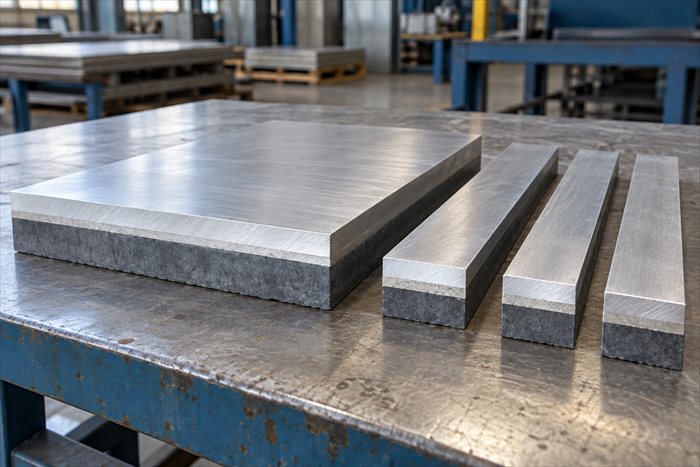
The layer structure also needs checking. Shockwave Metalworking Technologies' Triplate information describes a three-layer system containing steel, pure aluminium and an aluminium alloy. This is one published product structure, not a specification for every aluminium-steel product or a claim about this website's supply.
2. Which delivery condition fits your project?
Choose the option that matches both your approved design and your available fabrication resources. Use these three questions in order. The output is a proposed delivery condition to confirm with the supplier.
01 / Is the component drawing settled?
If the geometry is still changing, discuss plate stock or blanks with sufficient agreed allowance. If the drawing is approved, either route can work. Avoid ordering final machined parts against an unsettled revision.
02 / Can your workshop complete the remaining work?
Confirm equipment, product-specific processing instructions, inspection arrangements and material identification. If those resources are unavailable, request a supplier quotation that includes the missing operations.
03 / Who owns the last checks before installation?
Name the party responsible for checking finished dimensions, piece identification and the required documents. If no party is assigned, clarify the handover before selecting a quotation.
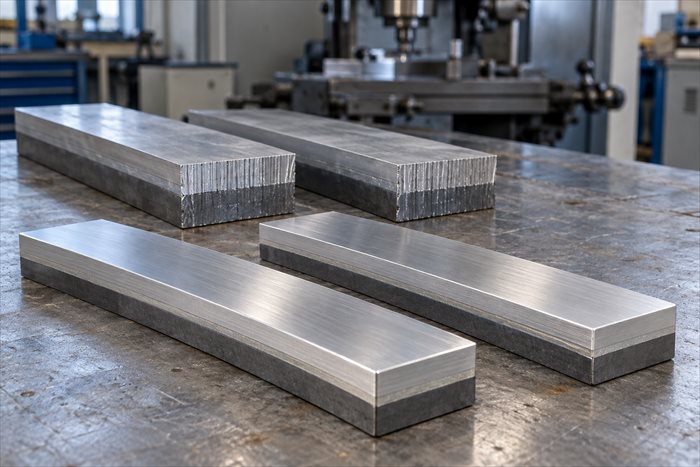
Plate stock may suit a fabricator making several shapes from the same material and managing the cutting layout. Finished joints may suit a project needing specified pieces with less work remaining on site. Neither route automatically gives a lower overall cost or better structural performance.
Processing requirements are product-specific. TriClad's fabrication guidelines, for example, restrict cutting methods and control heating near the bonded interface. Ask for instructions applicable to the actual product ordered; do not assume a convenient workshop process is acceptable.
3. How do you compare plate and joint quotations fairly?
Compare the cost of reaching the same agreed delivery condition. A plate-only price and a finished-piece price cover different work. Use the table to ask each supplier what is included, then record who completes the rest.
Use “included”, “excluded” or “to be confirmed” for each quotation. Swipe the table sideways on mobile.
| Check | Plate-stock quotation | Finished-joint quotation |
|---|---|---|
| Material definition | Grades, layer order and thickness of each layer | Same approved material requirements |
| Dimensions | Plate size, usable area and agreed allowance | Finished geometry and drawing revision |
| Processing | Who cuts and machines the individual pieces? | Which operations are completed or excluded? |
| Quantity | Number of plates and agreed cutting plan | Piece count by drawing or item number |
| Verification | Material and bond inspection records requested | Requested material records plus finished-feature checks |
| Identification | How will cut pieces stay linked to their source plate? | How will each item link to its supplied records? |
| Remaining work | Workshop labour, losses and checks to include | Site fitting, welding and any excluded preparation |
Use actual quotations for material, processing, inspection and transport. Where buying plate, also account for usable cutting yield and retained offcuts. Do not treat nominal plate area as a guaranteed number of finished joints.
4. What should you put in the enquiry?
State the delivery condition first, then attach the material and drawing requirements. Keep total thickness and individual layer thicknesses separate. Include applicable acceptance requirements and identify anything your engineering team has not yet approved.
Fictional RFQ example: finished pieces
“Please quote 24 aluminium-steel transition strips to drawing TJ-024, revision B, nominally 600 mm long × 50 mm wide. Use the approved layer materials and individual thicknesses on the drawing. Include cutting, dimensional finishing, deburring and item identification. Exclude installation welding. Please list inspection documents, processing guidance, packing, delivery date and all deviations separately.”
These dimensions and quantities are illustrative purchasing inputs, not recommended joint sizes. The example omits engineering values that must come from the actual approved design.
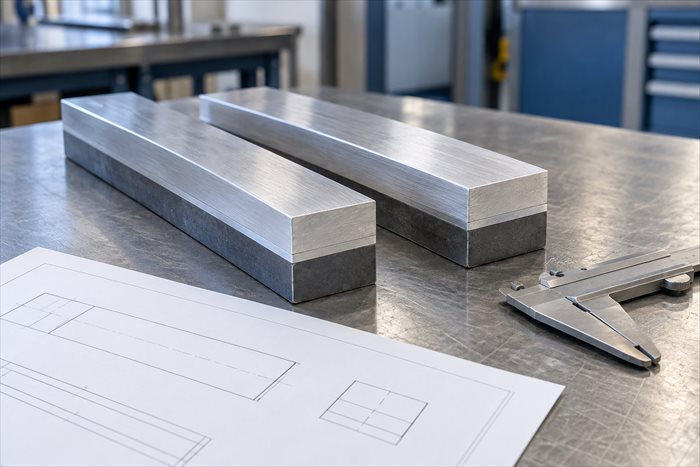
For a plate-stock enquiry, replace the piece requirement with the required plate dimensions, quantity and usable area. State who prepares the cutting layout, which allowances are needed and how resulting pieces will remain identifiable. If comparing both routes, request separate prices against the same material and final-part requirements.
Frequently asked questions
Does “finished” mean the joint is already installed?
No. Finished normally needs a definition in the purchase order. It may mean cut and machined to drawing, while fitting and welding remain with your fabricator. Ask for a list of completed and excluded operations.
Can two joints with the same total thickness replace each other?
Total thickness alone is insufficient. The grades, layer thicknesses, geometry and project requirements must also match the approved design. Refer any proposed substitution to the responsible engineer before accepting it.
Does a material report prove the finished part fits?
A material report and a dimensional check answer different questions. Request records linked to the supplied material and checks covering the finished features that matter to assembly. Agree the acceptance basis before ordering.
Make the requested delivery condition clear
Use the aluminium-steel clad plate overview to identify the product family. Confirm the actual layer structure and processing scope in the quotation.
Send your application, drawing revision, quantity and required delivery condition. State whether you need plate stock, cut blanks or finished transition joints, and include your destination and requested delivery date.